

SYDNEY AIRPORT 1947 - 1975
|
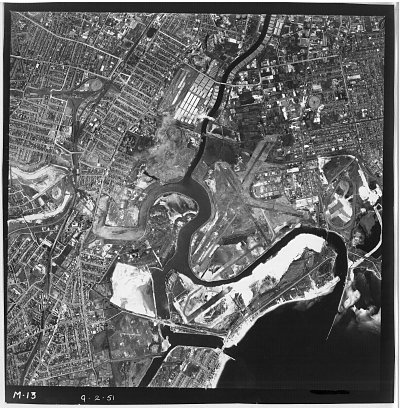
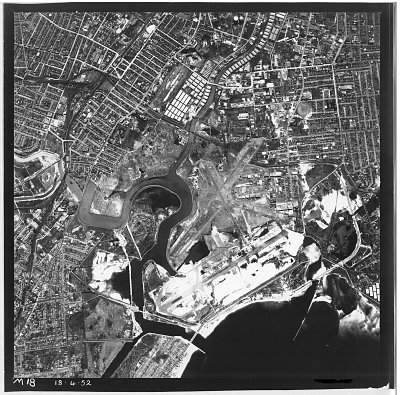
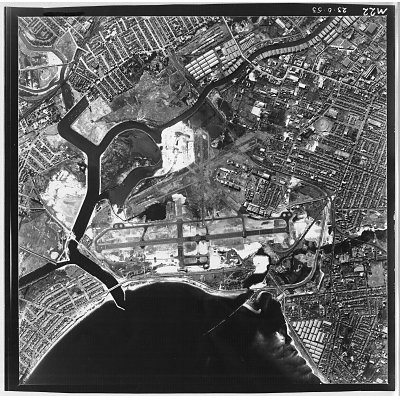
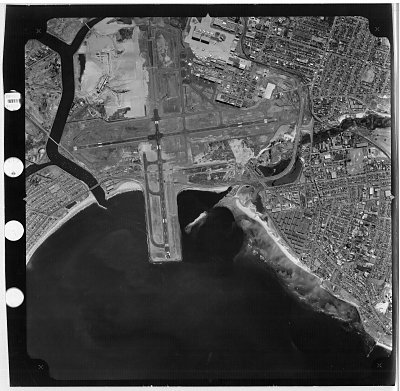
These remarkable Adastra
aerial photographs come from the collection of Madeline and Warren
Ide. Madeline was a photographic processor and printer with Adastra
from 1966 until 1976 while Warren was a photogrammetrist with
Adastra from 1956 until 1976. The majority of the photographs
were taken before Warren joined the company and he has no record
of why or for whom they were taken. Although Sydney Airport features
prominently in these photographs, it seems likely that the primary
subject of all but two of them was the nearby Cooks River. It
is probably no coincidence that a works programme to free up more
land for Sydney Airport by redirecting Cooks River took place
from 1947 until 1953.
|
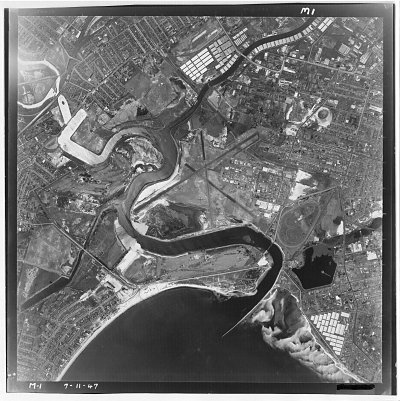
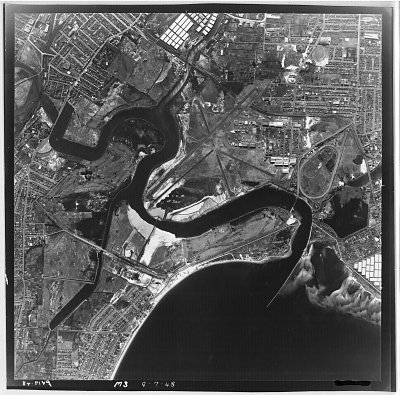
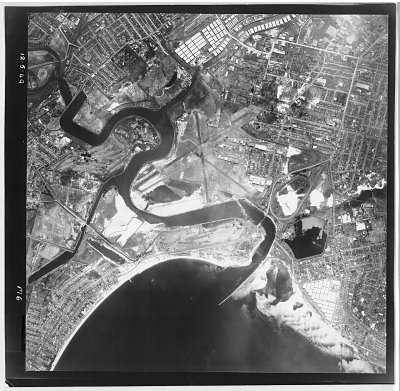
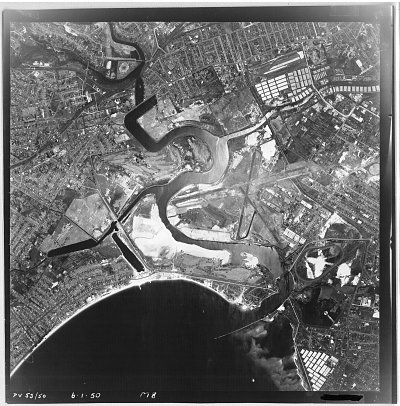
| All of the images below are linked to larger versions. The scans are taken from prints which are 9 inches square. To preserve as much detail as possible, the images are presented in the highest resolution available to the webmaster, so some scrolling will be necessary. All are presented with Botany Bay at the bottom of the image. On the larger images, the location of Adastra's hangar has been marked with a red dot. |
 |
|
1947
|
 |
|
1948
|
 |
|
1949
|
 |
|
1950
|
 |
|
1951
|
 |
|
1952
|
 |
|
1953
|
 |
|
c1969
|
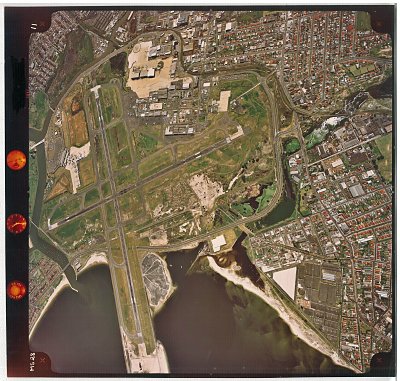 |
|
c1975
|
| Readers requiring aerial photographs of other areas of Australia should visit the website of United Photo & Graphics. This organisation has been contracted by Geoscience Australia to preserve and make available aerial photography from numerous Australian agencies. |
|
Issue
|
Date
|
Remarks
|
|
1
|
12OCT11
|
Original
issue.
|