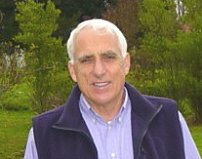
|
In
April 1968, I had presented my flying credentials to a rather old,
scruffy looking Chief Pilot and was walking out the door with yet
another "sorry no vacancies" ringing in my ears when behind me came
"whoa ….hang on a mo!" Lionel had just read in my CV that I had,
until recently, been installing an airfield radar system at Ohakea
(in NZ) and weather radar systems around many of the Pacific Islands.
It transpired that a radar technician was desperately needed to
join a Hudson crew out at a place called Giles! Within hours I was
duly deposited at The Alice and introduced to a bunch of guys who
not only seemed to party continuously, but transported themselves
around in the most dilapidated, dusty, oil covered aircraft I had
ever seen (AGX). Captain Bob Marty, Alex Whitworth (Nav), Reg Nelson
(Radar tech), Neil Edwards (Eng.) seemed to be living a lifestyle
not dissimilar to Mel Gibson's "Air America". Such was my introduction
to Adastra, Tom Flood's hostel at The Alice (where we seemed to
end up 'on leave' every few days), and life camping 'desert style',
(because we had been chucked out of the Giles weather station mess)
in one of the remotest parts of Australia.
The radar work was of course the airborne profile recording systems
(APR) used on the Hudsons to provide altitude and lateral references
for the higher level photography that had been conducted earlier
over the Gibson and Simpson deserts. There followed, some memorable
months, during which I introduced a portable radar target screen
system for calibrating the APR (to save endless flights to various
calibration locations). Bob Marty departed not long after my joining
the company and many interesting and entertaining hours were spent
in AGX flying "Lionel style", followed by a longer spell with John
Hampshire (a very experienced Super Connie and Sunderland pilot).
In December 1968, Brian Costello was promoted from the C206 to a
Hudson and I was offered a position, flying Adastra's C206, VH-DGD.
The check flight with Lionel remains one of the most searching I
have ever had. At no other time in my flying career (on single engine
aircraft) have I been expected to demonstrate a forced landing with
the wheels running through a field of grain on the selected landing
zone, followed by a climb up a hillside that had to be at precisely
best 'angle of climb' speed to avoid hitting the terrain. With Lionel,
everything had to be as realistic as possible!
It seems quite adventurous by modern standards to fly a C206 right
across Australia (about 6 times) with nothing more than a compass
and 'precessing' DG! While we carried out RC8 photography in many
places throughout Australia, most of DGD's work at the time, was
in the developing Queensland coal fields and all the associated
infrastructure, roads, rail and National Mapping projects, Fraser
Island etc. Since we were often climbing to 25,000' above Mackay,
Cairns or Townsville, places like Brampton or Dunk Islands were
much more "convenient" bases. One flight that remains a highlight,
was our photography of the test launch of the Australian Navy's
new rocket powered torpedoes (Ikara).
We (crew myself, Mike Wood and Mark Liardet - I think ) flew some
100NM out from Nowra (VFR of course - but legal in Navy airspace)
and liaised with the 'fleet', positioning ourselves directly over
the launch point as the rocket was fired and capturing the entire
flight on film. We were about the third or fourth crew to attempt
this and the first to succeed!
Whilst flying out to rendezvous with the fleet, one lesson well
learned by a young pilot, was what happens flying VFR at 14,000'
over the sea in quite good visibility, when the horizon (due to
increasing haze), ever-so-slowly starts to blend in with the sea.
Next thing we were over at 45deg and although I had already initiated
correction, Mike, sitting in the R/H seat and quite sure we were
headed for disaster, had to be pried off the controls. Subsequently
I have known of at least two aircraft losses in PNG (at a much lower
altitude of course) that could probably be attributed to this phenomenon.
On leaving Adastra (in 1970) I obtained all ALTP subjects and later
that year joined SAATAS in Darwin flying C310's and C337's around
the top end. Thoroughly enjoyable (and challenging) charter work
into the many hundreds of station & mining strips that dot the top
end from Karumba through to The Alice & Derby. (That in itself would
make another interesting website).
Following this was a spell in Air Traffic Control (Sydney) - not
my scene - then work (utilising my electronics background) on shipping
in the Port of Brisbane for about a year.
In 1974 I joined Mapmakers in Port Moresby, flying an old turbo
PA-23 on aerial photography around Queensland and Papua New Guinea,
doing (on a smaller scale) much the same work as we did in Adastra.
The camera for the wildly varying terrain of PNG was (of course)
the old reliable Wild RC8 and the photography covered just about
every aspect of life in 'developing' PNG - from the volcanoes (infrared
photography of the Rabaul area prior to the eruption) through to
mining, forestry, land boundary and town surveys. When crewing with
Jess Vasquez*, we took some vertical shots of Manum volcano near
Wewak, as the lava boiled away merrily underneath. Jess only told
me later about the rather large rocks he had seen through the drift
sight hurtling our way!
Papua New Guinea is very challenging - probably one of the most
difficult and dangerous areas to fly in the world, and although
we did not really have the operational weather worries of other
pilots, survey flying was, nevertheless, exceptionally difficult.
In PNG it was not a case of just waiting for a fine day, you had
to work out in advance which day it was likely to be and then have
the aircraft sitting at 25,000' ready to roll at precisely the first
sun-angle time. Then you had on average about 15 - 20 mins to get
something in the can. No second chances! If you missed, in some
areas it could be a year or more before you had another chance.
To make matters worse, the lovely yellow plastic 'ground targets'
often made excellent rain coats.
This also produced servicing issues - we had to be serviceable come
what may, so plenty of spare parts were carried on board, with oil
and filter changes 'on site' with a great deal of "crew servicing"
whenever possible. Now, where would one get experience doing that
sort of thing?
However, even survey work required transiting "PNG VFR" in some
horrible weather conditions and I can well relate to Wally Bowles
story about the flight into Lae. It was not as if you had a choice
whether or not you wanted to fly in these conditions, the weather
was often inflicted on you. For example, it was not unusual to be
carrying out photography at 25,000 in wide-open blue sky and then
be landing in the same location 40 minutes later in torrential rain
- especially when the Inter Tropic Front was around. It's rather
interesting flying when there is nothing but solid water outside
the cockpit. I could not count the times I thanked the engineers
who designed these wonderful engines and systems that "soldiered
on" through conditions that should have been impossible! I can recall
taking off at Tabubil (Western Highlands) once. As we commenced
the takeoff roll (one way, down the slope), there was perfect visibility
along the strip and the departure track. By the time the aircraft
was at rotate speed we were in zero visibility and "on the gauges"
due to torrential rain from a Cb that had just "let go". (We were
also heading for a cliff - this was before the strip was realigned
to its present position).
I spent about 13 years doing this - and loved every minute of it.
Returned to Auckland in 1987 and built my own house (literally)
in Greenhithe. That was followed by another short spell back with
Mapmakers in PNG, then 10 years as General Manager of an Auckland
electrical manufacturing business, before starting my own business
(with wife Susan) in 2000.
As "Albany Electronic Components Ltd", we now supply components
to electronics manufacturers mostly throughout New Zealand and Australia.
Bruce Beale
18 July 2005
*
Correction
07AUG11:
The other crew member on this flight was previously named as Richard
Rudd. Although Bruce did fly with Richard Rudd, the crew member
on the flight in question was Jess Vasquez.
|